
Minimalist Chore Chart Template for Adults
Minimalist Chore Chart Template for Adults
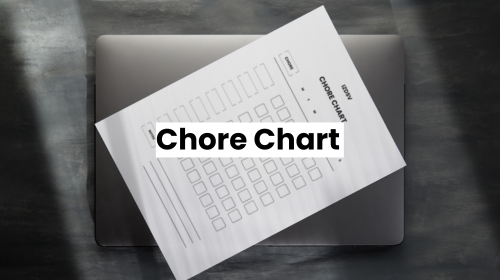
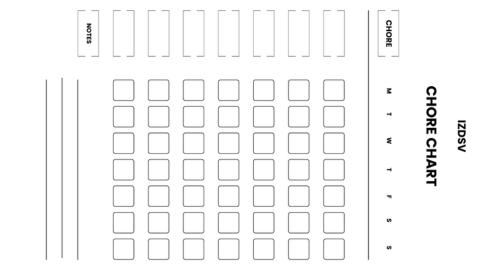
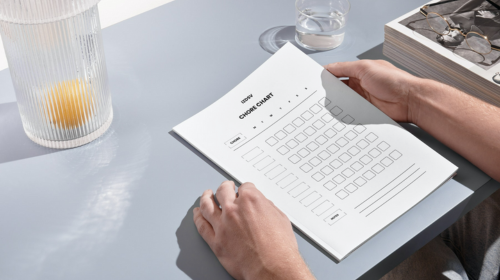
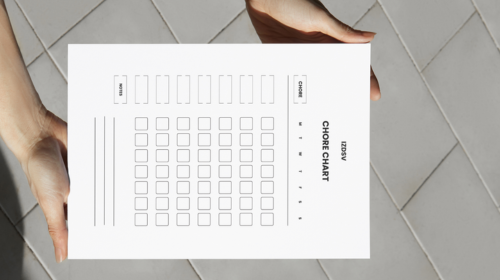
A minimalist chore chart template for adults is a clean, simple organizational tool that lists household tasks without excessive decoration or complexity. It typically uses a straightforward grid or list format with just the essential information: tasks, days of the week, and completion tracking.
- Usually features a weekly or monthly grid layout with tasks on one axis and days/dates on the other
- Employs neutral colors, simple fonts, and plenty of white space for visual clarity
- Includes only necessary categories like cleaning, maintenance, personal care, and administrative tasks
- Can be customized with checkboxes, initials, or simple marks to track completion
- Often available as printable PDFs, digital spreadsheets, or app-based formats
- May incorporate rotating schedules for tasks that don’t need daily attention
- Focuses on functionality over aesthetics, though still visually pleasant
What is a Minimalist Chore Chart?
A minimalist chore chart is a simplified tracking system that helps you manage household responsibilities using only the most essential design elements. It strips away decorative features, complex color schemes, and unnecessary categories to focus purely on task management and accountability.
- Based on minimalist design principles: simplicity, functionality, and intentionality
- Contains only critical information without clutter or distraction
- Uses clean lines, limited color palettes (often black, white, and one accent color)
- Avoids elaborate graphics, motivational quotes, or decorative borders
- Emphasizes ease of use and quick visual scanning
- Can be physical (printed/whiteboard) or digital (apps/spreadsheets)
- Adaptable to individual needs without overwhelming options
Benefits of Using a Chore Chart
Using a chore chart creates accountability and structure, making it easier to maintain a clean, organized living space without mental overload. It transforms vague intentions about household tasks into concrete, actionable plans that reduce decision fatigue.
- Reduces mental burden by eliminating the need to remember all tasks
- Distributes household responsibilities fairly among roommates or family members
- Prevents tasks from being forgotten or neglected until they become urgent
- Creates visible progress that provides satisfaction and motivation
- Helps establish consistent routines and healthy habits
- Reduces conflicts about who should do what tasks
- Makes it easier to identify patterns (like tasks that consistently get skipped)
- Saves time by eliminating daily decisions about what needs to be done
- Allows for better planning and time management throughout the week
- Particularly helpful for people with ADHD or executive function challenges
Creating Your Minimalist Chore Chart
Creating your minimalist chore chart begins with assessing your actual household needs and identifying which tasks truly require tracking. The key is to start simple and only add complexity if absolutely necessary, rather than beginning with an elaborate system you won’t maintain.
- Start by listing all recurring household tasks for one week to identify patterns
- Group similar tasks together (cleaning, laundry, kitchen, outdoor, and administrative)
- Determine realistic frequencies for each task (daily, weekly, monthly)
- Decide whether you need individual accountability or shared household tracking
- Choose tasks that genuinely need monitoring rather than those you do automatically
- Consider your living situation (apartment vs. house, living alone vs. with others)
- Test your initial chart for 2-3 weeks before making it permanent
- Be willing to adjust and refine based on what actually works in practice
- Keep the total number of tracked tasks manageable (typically 10-20 tasks maximum)
Choosing the Right Format
The right format depends on your lifestyle, tech preferences, and how you naturally interact with organizational tools throughout your day. Consider whether you’re more likely to engage with something physical you can see or a digital tool you always have with you.
- Paper/printed formats work well if you prefer tangible reminders and have a central household location
- A whiteboard or chalkboard allows easy erasing and updating without waste
- Digital spreadsheets (Google Sheets, Excel) offer flexibility and can be accessed from multiple devices
- Note-taking apps (Notion, Evernote, Apple Notes) provide simple checklists with minimal setup
- Dedicated apps (Tody, OurHome, Sweepy) offer pre-built templates, but may feel less minimalist
- Bullet journal spreads integrate well if you already use this planning method
- Consider where you’ll see it most: fridge, wall, phone lock screen, or desktop
- Think about whether you need collaboration features for multiple people
- Evaluate if you want automatic resets (digital) or manual refreshing (physical)
Essential Elements to Include
A minimalist chore chart needs only three core components: the tasks themselves, a time framework, and a completion indicator. Everything beyond these three elements should be carefully evaluated for whether it truly adds value or just creates visual noise.
- Task names: Clear, specific descriptions (use “vacuum living room”, not just “vacuum”)
- Time frame: Days of the week, dates, or frequency indicators
- Completion tracking: Checkboxes, initials, dots, or simple marks
- Person responsible (if shared household): Names or assigned colors
- Optional frequency codes: D (daily), W (weekly), M (monthly) for mixed schedules
- Rotation indicators if tasks alternate between people
- Reset the date or week number to know when the chart period begins
- Avoid including: motivational quotes, elaborate legends, reward systems, or excessive categories
- Keep instructions minimal or nonexistent—the chart should be self-explanatory
Design Tips for a Minimalist Aesthetic
A minimalist aesthetic prioritizes white space and visual breathing room, allowing your eyes to quickly find information without processing decorative elements. The design should fade into the background, making the actual information—your tasks and progress—the focal point.
- Use a limited color palette: typically 1-3 colors maximum (black/gray text plus one accent)
- Embrace white or neutral backgrounds rather than patterns or textures
- Choose simple, clean fonts: sans-serif fonts like Arial, Helvetica, or Calibri work well
- Ensure adequate spacing between rows and columns so the chart doesn’t feel cramped
- Use thin lines or subtle borders rather than heavy, bold dividers
- Implement consistent alignment: left-align text, center-align checkboxes
- Keep font sizes uniform except for a slightly larger header
- Avoid icons, clipart, emojis, or decorative elements unless absolutely functional
- Use grids or tables for structure rather than freeform layouts
- Consider monochrome designs for the most minimal appearance
- If using color, apply it sparingly and purposefully (perhaps only for completion marks)
- Ensure sufficient contrast for readability without harsh, jarring combinations
- Leave margins around the entire chart for visual comfort
How to Use Your Chore Chart Effectively
Using your chore chart effectively means treating it as a living tool that serves you, not a rigid system that creates additional stress. The goal is to make household management easier and more automatic, so your chart should feel helpful rather than like another burden on your to-do list.
- Place it in a high-visibility location where you naturally look multiple times daily
- Check it at consistent times each day (morning coffee, after work, before bed)
- Mark completions immediately rather than trying to remember later
- Be honest about what gets done instead of checking boxes aspirationally
- Use it as a planning tool for the week ahead, not just a record of the past
- Celebrate streaks and progress to build positive associations with the system
- Don’t punish yourself for missed tasks—just reset and continue
- Integrate it with existing routines rather than creating entirely new habits
- Keep marking tools readily available (pen attached to paper chart, phone always accessible)
- Make it a household ritual if living with others (Sunday planning session, Friday review)
Setting Goals and Responsibilities
Setting clear goals means defining what “done” looks like for each task and establishing realistic expectations based on your actual schedule and energy levels. If you live with others, this is also when you negotiate fair distribution based on preferences, abilities, and availability rather than assumptions.
- Define task standards clearly: what does “clean the bathroom” actually include?
- Be specific about frequency: “weekly” could mean any day, but “every Saturday” is concrete
- Consider energy levels: assign demanding tasks to your typically high-energy days
- Match tasks to preferences when possible (some people prefer cooking, others cleaning)
- Account for actual available time: don’t schedule 3 hours of chores on your busiest day
- Distribute load fairly in shared households based on work schedules and capabilities
- Assign primary responsibility even if others can help (one person owns each task)
- Set realistic completion rates: aiming for 80% completion is more sustainable than 100%
- Include buffer time for when life gets chaotic
- Communicate openly about what feels manageable versus overwhelming
- Revisit responsibilities when life circumstances change (new job, health issues, etc.)
Maintaining Consistency
Maintaining consistency is about building habits and systems that make chart usage automatic rather than relying on motivation or willpower. The easier and more frictionless you make the process, the more likely you are to stick with it long-term.
- Anchor chart-checking to existing habits: check it while drinking morning coffee or brushing teeth
- Set phone reminders for the first few weeks until checking becomes automatic
- Keep the barrier to entry low: the chart should take 30 seconds to update, not 5 minutes
- Use the “never miss twice” rule: if you skip a day of checking, definitely check the next
- Make it satisfying: use a pen you enjoy, satisfying checkmarks, or rewarding completion sounds (apps)
- Stack related tasks together: if doing laundry, check all laundry-related items at once
- Create accountability through shared charts or check-ins with roommates/partners
- Start small: better to consistently track 5 tasks than inconsistently track 20
- Link completion to rewards: weekend leisure guilt-free, only after weekday tasks are done
- Troubleshoot obstacles immediately: if you’re not using it, figure out why within a week
- Forgive lapses quickly: missing a week doesn’t mean failure, just resume without guilt
Reviewing and Adjusting Your Chart
Reviewing and adjusting your chart is essential because your initial setup is just an educated guess that needs real-world testing. Regular reviews help you identify what’s working, what’s creating friction, and how your needs may have evolved since you started.
- Schedule monthly reviews: set a calendar reminder to evaluate the system
- Track completion rates: which tasks consistently get done versus skipped?
- Identify patterns: Do certain days become overwhelming? Are some tasks unnecessary?
- Ask key questions: Is this reducing stress or adding to it? Am I maintaining my home better?
- Remove tasks you do automatically: if you never forget it, stop tracking it
- Add tasks you consistently forget: these are exactly what the chart should capture
- Adjust frequencies based on reality (maybe weekly was too often, biweekly works better)
- Redistribute responsibilities if one person is consistently overloaded
- Simplify task descriptions if you find yourself confused about what to do
- Change the format if you’re not engaging with it (switch from digital to paper or vice versa)
- Consolidate similar tasks: “tidy living room” might combine five small tasks
- Be willing to start over: sometimes a complete redesign works better than incremental tweaks
- Celebrate what’s working: acknowledge improvements in household management and mental clarity
- Stay flexible: your chart should evolve with seasons, life changes, and shifting priorities
Minimalist Chore Chart Templates
Minimalist chore chart templates provide a ready-made foundation that you can adapt to your specific needs without starting from scratch. These pre-designed templates save time and often incorporate design best practices that ensure your chart is both functional and visually clean.
- Pre-formatted layouts eliminate the need to figure out spacing, columns, and structure
- Professional design ensures readability and visual balance from the start
- Multiple style options let you choose what resonates with your aesthetic preferences
- Easy customization allows you to add, remove, or modify elements as needed
- Print-ready formats (PDF) for physical charts with proper margins and sizing
- Editable formats (Word, Excel, Canva) for digital customization before printing
- Mobile-friendly versions designed for use on phones and tablets
- Various time frames: daily, weekly, monthly, or habit-tracker styles
- Solo and shared options for individuals or households with multiple people
- Free and premium choices depending on your budget and feature needs
- Instant access means you can start organizing immediately
Where to Find Templates
You can find quality minimalist chore chart templates across numerous platforms, from general design sites to specialized home organization resources. Both free and paid options exist, with free templates often being sufficient for most people’s needs.
- Canva.com: extensive free template library with easy online editing tools
- Izdsv.com: resource for minimalist templates and organizational tools
- Etsy.com: paid templates from independent designers, often very aesthetically refined
- Pinterest: links to countless free templates from blogs and creators
- Google Sheets Template Gallery: functional, collaborative spreadsheet options
- Microsoft Office Templates: built-in templates in Word and Excel
- Notion Template Gallery: digital-first options for app users
- Clean Mama, Abby Organizes, The Spruce: home organization blogs with free printables
- Reddit communities: r/productivity and r/organization members share custom templates
- Template.net and Vertex42: websites dedicated to free downloadable templates
- Teachers Pay Teachers: designed for classrooms but adaptable for adults
- Your own creation: simple tables in Google Docs/Sheets or even hand-drawn designs
Customizing Your Template
Customizing your template transforms a generic design into a personalized tool that matches your specific household tasks, schedule, and visual preferences. The best template is one that reflects your actual life rather than an idealized version of what chores “should” look like.
- Replace placeholder tasks with your actual household responsibilities
- Adjust the time frame if the template is weekly, but you prefer monthly tracking
- Add or remove columns to match the number of days or people in your household
- Change fonts to something you find more readable or appealing
- Modify colors to match your home décor or personal preference (while keeping it minimal)
- Resize the template to fit your available space (fridge, wall, planner)
- Add your household member names or initials for shared responsibility tracking
- Include frequency indicators (D/W/M) if the template doesn’t have them
- Simplify task descriptions to match your personal shorthand
- Remove decorative elements that feel like clutter to you
- Add specific standards in small text if tasks need clarification (“bathroom = toilet, sink, mirror”)
- Incorporate your existing systems: if you use color-coding elsewhere, continue it here
- Laminate physical templates so you can use dry-erase markers and reuse them indefinitely
- Create different versions for different seasons if your tasks change significantly
- Test on cheap paper first before printing on premium cardstock or committing to a laminated version