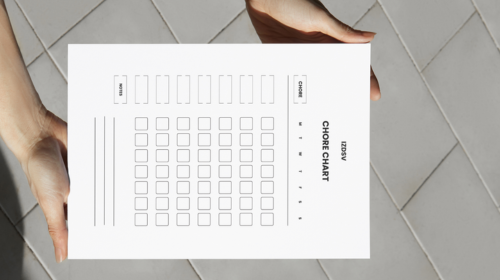
Magnetic chore chart for young children. Teach responsibility and reward good behavior with a fun magnetic chore chart and schedule household tasks
How does a magnetic chore chart help with responsibility?
A magnetic chore chart helps with responsibility by making tasks visible and trackable, allowing children to see what needs to be done and take ownership of completing those tasks. The interactive nature of moving magnets from “to-do” to “done” creates a tangible sense of accountability.
- Creates clear expectations by displaying specific tasks children are responsible for
- Provides visual reminders that help kids remember their duties without constant parental prompting
- Builds independence as children can check their own chart and complete tasks without being told
- Establishes routines that become habits over time
- Allows children to practice following through on commitments
What is a magnetic chore chart for kids, and how does it teach responsibility?
A magnetic chore chart for kids is a visual organizational tool that uses magnets to display and track household tasks assigned to children. It teaches responsibility by giving children concrete tasks to manage and a system to monitor their own progress.
- Makes abstract concepts like responsibility concrete through physical interaction with magnets
- Empowers children to manage their own tasks rather than relying on parents to direct them
- Creates natural consequences when tasks aren’t completed (empty spots on the chart are obvious)
- Teaches time management as children learn to fit chores into their daily schedules
- Develops accountability as children can clearly see which tasks they’ve completed or missed
How does a responsibility chart build a sense of accomplishment for toddlers?
A responsibility chart builds accomplishment for toddlers by providing immediate, visual feedback when they complete simple tasks, which validates their efforts and capabilities. The act of moving a magnet or placing a sticker gives toddlers a concrete way to celebrate their success.
- Offers instant gratification through the physical act of marking tasks complete
- Breaks down responsibilities into small, achievable steps that don’t overwhelm young children
- Creates a visual record of success that toddlers can look back on with pride
- Provides opportunities for praise from parents when they see completed tasks on the chart
- Builds confidence as toddlers realize they can successfully contribute to the household
Can a magnetic responsibility chore chart improve daily chores and behavior?
A magnetic responsibility chore chart can improve daily chores and behavior by creating structure and consistency that helps children know what’s expected of them. When children understand their responsibilities and can track their progress, they’re more likely to complete tasks and exhibit positive behaviors.
- Reduces conflicts by eliminating ambiguity about who does which chores
- Creates positive behavioral patterns through consistent routines
- Motivates children through the satisfaction of completing visible goals
- Decreases forgetfulness by serving as a constant visual reminder
- Can be paired with reward systems to reinforce good behavior and task completion
What types of magnetic boards and magnets work best?
The best magnetic boards are those made with strong magnetic surfaces like steel or quality magnetic sheeting, while the best magnets are durable, easy for small hands to grip, and clearly labeled. Dry-erase magnetic boards offer the most flexibility since you can change chores as your children grow.
- Whiteboard-style magnetic boards work well because you can write directly on them and easily update tasks
- Metal boards with powder-coated finishes are durable and resistant to wear from daily use
- Strong neodymium magnets or thick ceramic magnets stay in place better than thin magnetic sheets
- Colorful, chunky magnets are easier for young children to handle and more visually engaging
- Pre-printed task magnets with pictures help non-readers understand their responsibilities
- Magnetic dry-erase markers allow you to write custom tasks without needing separate magnets
Should you choose a large chore board or a minimalist magnetic board?
A large chore board works best for families with multiple children or many tasks to track, while a minimalist magnetic board suits single children or families preferring a clean, simple approach. Your choice should depend on how many chores you’re tracking and your available wall space.
- Large boards accommodate more children and tasks without feeling cluttered
- Minimalist boards work well for toddlers or preschoolers who only have a few age-appropriate tasks
- Large boards can include multiple sections, like daily tasks, weekly chores, and rewards
- Minimalist boards are less overwhelming for young children and easier to focus on
- Large boards grow with your family as you add more children or responsibilities
- Minimalist boards fit better in small spaces like apartments or shared bedrooms
What magnets and magnetic accessories fit a dry-erase or erasable chore chart?
Any magnet with sufficient strength will work on a dry-erase board as long as the board has a steel backing, and the best accessories include dry-erase markers, magnetic erasers, and magnetic storage containers. The key is ensuring the magnets are strong enough to hold securely, even when the board is vertical.
- Flat button magnets in different colors can represent different children or task categories
- Magnetic name tags or photo holders personalize each child’s section
- Magnetic reward stars or smiley faces provide positive reinforcement
- Small magnetic clips can hold paper task cards or reminder notes
- Magnetic pen holders keep dry-erase markers attached to the board
- Magnetic storage pockets can hold extra magnets or future task cards
Which magnet styles are best for multiple kids and personalized children’s name tags?
Color-coded magnets work best for multiple kids because each child can have their own color to quickly identify their tasks, while personalized magnetic name tags with photos or custom designs help younger children who can’t read yet. Combining both approaches creates the clearest system for busy families.
- Different colored magnetic frames or borders for each child’s section prevent confusion
- Photo magnets featuring each child’s picture make it easy for non-readers to find their tasks
- Custom printed magnets with each child’s name in fun fonts add personalization
- Shape-coded magnets (stars for one child, circles for another) provide visual differentiation
- Magnetic chalkboard labels allow you to write and rewrite names as needed
- Character-themed magnets let each child choose their favorite design for their tasks
How to design a colorful, visual chore chart for kids?
A colorful, visual chore chart should use bright, contrasting colors to draw attention and make the chart fun to interact with, while incorporating pictures or icons alongside words to help children of all reading levels understand their tasks. The design should be organized clearly so children can easily see what they need to do.
- Use a different background color for each section (morning chores, afternoon chores, evening chores)
- Include picture icons next to each task name so non-readers can identify chores
- Choose bold, primary colors like red, blue, yellow, and green that appeal to young children
- Create visual separation between children’s sections using colored borders or frames
- Add fun fonts for headings and task names to make the chart feel playful rather than like homework
- Include a rewards section with bright, celebratory colors like gold or rainbow designs
How to create a colorful task layout that keeps toddlers engaged?
A toddler-friendly task layout should feature large, simple pictures that clearly represent each chore, paired with minimal text and lots of empty space to avoid overwhelming young children. Interactive elements like movable magnets or stickers give toddlers hands-on engagement that holds their attention.
- Use oversized picture icons (3-4 inches) that toddlers can easily see and understand
- Limit the number of tasks to 3-5 per day so toddlers don’t feel overwhelmed
- Create a simple left-to-right or top-to-bottom flow that mirrors how toddlers learn to read
- Add tactile elements like textured stickers or foam magnets that feel interesting to touch
- Use cartoon-style illustrations or real photos that clearly show the task being done
- Include a “done” celebration area with stars, smiley faces, or other fun rewards that toddlers can earn
What visual elements (stickers, icons, markers) help a behavior chart for kids?
Stickers and icons serve as immediate visual rewards that motivate children to repeat positive behaviors, while markers like checkmarks or star stamps provide satisfying ways to track progress. The most effective visual elements are those that children find exciting enough to want to earn.
- Reward stickers in fun shapes (stars, animals, hearts) give children something to collect
- Picture icons showing correct behaviors help children understand expectations without reading
- Colorful dry-erase markers let children check off tasks themselves, promoting independence
- Emoji faces (happy, proud, excited) help children connect behaviors with emotions
- Progress bars or thermometer-style trackers show cumulative achievements over time
- Special “super stickers” or stamps for exceptional behavior create extra motivation
How to personalize a magnetic chore chart for multiple kids and schedules?
Personalizing for multiple kids requires giving each child their own clearly defined space with their name, photo, or chosen color theme, while accommodating different schedules means creating flexible sections that can display age-appropriate tasks for each child. The key is making each child feel ownership over their section while keeping the overall chart organized.
- Assign each child a signature color that appears in their name tag, task magnets, and section borders
- Add individual photos of each child at the top of their column or section
- Create age-differentiated task lists so older kids have more complex chores than toddlers
- Use movable magnetic name labels so you can rearrange sections as schedules change
- Include separate “weekday” and “weekend” sections since routines often differ
- Add personal touches like each child’s favorite sticker style or character theme in their area
- Design rotating responsibility sections for shared chores that alternate between children weekly
Can a magnetic chore chart be a reward system?
Yes, a magnetic chore chart can absolutely serve as a reward system by using visual tracking of completed tasks to earn privileges, prizes, or special activities. The magnetic format makes it easy to add reward elements like token magnets, point trackers, or prize goal displays right alongside the chore assignments.
- Add a reward tracker section where children move magnets toward a goal with each completed chore
- Use token magnets (stars, coins, checkmarks) that children collect and exchange for rewards
- Create milestone markers on the chart where reaching certain totals unlocks special privileges
- Include a “prize menu” section showing what rewards are available at different point levels
- Design weekly or monthly goal areas where consistent completion earns bigger rewards
- Incorporate immediate small rewards (extra playtime) and long-term rewards (special outing) for sustained effort
How to set up a magnetic reward chart for kids with stickers and rewards?
To set up an effective magnetic reward chart, create distinct sections for tasks, tracking progress, and displaying available rewards, then establish clear criteria for how children earn stickers or magnets toward those rewards. The system should be simple enough that children understand exactly what they need to do to earn each reward.
- Designate one side of the board for chores and the other side for the reward tracker
- Create a point system where each completed chore earns one magnet or sticker
- Display pictures or written descriptions of available rewards with their “prices” in points
- Use a collection jar or magnetic container where earned token magnets accumulate visibly
- Set up different reward tiers (5 magnets = small reward, 20 magnets = medium reward, 50 = big reward)
- Make a visual progress bar showing how close children are to their chosen reward goal
- Include both individual rewards each child works toward and family rewards everyone earns together
What reward strategies work with a dry-erase chore chart to reinforce behavior?
Immediate acknowledgment combined with visual progress tracking works best—marking completed tasks with colorful checkmarks or tallying points directly on the dry-erase surface provides instant gratification while building toward larger goals. Pairing intrinsic rewards (pride, accomplishment) with extrinsic ones (privileges, treats) creates sustainable motivation.
- Draw smiley faces or stars next to completed tasks for immediate positive feedback
- Keep a running tally of points or checkmarks that children can watch grow throughout the week
- Use different colored markers to show exceptional effort versus standard completion
- Create bonus point opportunities for tasks done without reminders or with extra care
- Implement experience-based rewards (movie night, park trip) rather than just material items
- Offer choice rewards where children select from several options at their point level
- Celebrate streaks by marking consecutive days of completion with special notation
How to balance rewards and responsibilities without bribing your child?
The key is framing rewards as recognition of effort and accomplishment rather than payment for basic expectations, while emphasizing that contributing to the family is valuable in itself. Focus on natural consequences and privileges rather than treats, and gradually shift from external rewards to internal satisfaction as children mature.
- Position chores as everyone’s contribution to the family rather than optional tasks that earn payment
- Use privilege-based rewards (staying up later, choosing dinner) that feel like natural consequences of responsibility
- Celebrate effort and attitude equally with task completion to avoid purely transactional thinking
- Gradually reduce reward frequency as habits form, moving from daily to weekly recognition
- Emphasize intrinsic benefits by discussing how good it feels to help and be responsible
- Avoid negotiating or offering rewards mid-resistance—state expectations first, rewards are predetermined
- Include non-reward motivators like family pride, growing independence, and being a “big kid helper”
- Reserve special rewards for going above and beyond rather than meeting basic expectations
Where to place and how to use a magnetic chore chart (fridge, wall, calendar)?
The best placement for a magnetic chore chart is in a high-traffic area where children pass multiple times daily, at a height they can easily reach and interact with independently. How you use it should involve daily check-ins where children review their tasks, mark completions themselves, and receive acknowledgment from parents.
- Place it in the kitchen where morning and evening routines naturally occur
- Mount it at child height (not adult height) so kids can reach all magnets without help
- Position it near where related supplies are stored (cleaning closet, bathroom) for easy reference
- Choose a spot with good lighting so the chart is clearly visible throughout the day
- Establish a routine time (after breakfast, before dinner) when children check and update their charts
- Keep magnetic markers or tokens in a designated spot attached to or near the board for easy access
Is the fridge the best place for a magnetic chore chart for kids?
The fridge is often an excellent location because it’s centrally located in most homes and naturally magnetic, though it may not be the best choice if it’s too high for children to reach or if the surface is too cluttered with other items. The ideal spot depends on your specific home layout and family traffic patterns.
- Fridges work well because families visit the kitchen multiple times daily for meals and snacks
- The magnetic surface requires no installation or wall damage, making it renter-friendly
- Fridge placement keeps the chart at the heart of family activity and conversation
- However, fridges can become cluttered with artwork and papers that hide the chart
- Lower fridge sections may be better for toddlers, while upper sections suit older children
- Consider dedicating one fridge door exclusively to the chore chart to prevent overcrowding
- If your fridge is in a corner or faces away from the main traffic flow, a wall location might be better
How to integrate a magnetic calendar or schedule into daily chores and school routines?
Integrate a magnetic calendar by creating a unified command center that shows chores alongside school events, appointments, and activities, allowing children to see how their responsibilities fit into the bigger picture of their day. This combined approach teaches time management and helps children understand when to complete tasks around their other commitments.
- Use one section of the board for a monthly calendar showing school days, activities, and special events
- Create daily schedule rows showing morning routine, after-school time, and evening tasks
- Color-code school days versus weekends since chore expectations often differ
- Add time-specific chores to the calendar (trash day on Wednesdays, sheet-changing on Sundays)
- Include homework time on the schedule so children learn to balance schoolwork and chores
- Mark early-dismissal days, holidays, and vacation periods when routines change
- Add visual reminders for upcoming events that require preparation (pack lunch the night before, lay out clothes)
How to keep a magnetic dry-erase chore chart organized for household chores?
Keep your chart organized by establishing clear zones for different types of information, regularly erasing and updating completed items, and maintaining a consistent layout that doesn’t change weekly. A well-organized system requires minimal mental effort for children to understand and use.
- Divide the board into permanent sections with colored tape or drawn borders that don’t get erased
- Group similar chores together (all bathroom tasks in one area, all pet care in another)
- Use consistent abbreviations or symbols that children learn to recognize quickly
- Erase completed daily tasks each evening or morning to start fresh and avoid confusion
- Keep a master list of all possible chores written small in one corner for easy reference
- Store extra magnets, erasers, and markers in a magnetic container attached to the board
- Review and reorganize the entire chart monthly to remove tasks kids have outgrown and add new ones
- Photograph the current layout on your phone so you can recreate it if something gets accidentally erased
How to choose and maintain an erasable magnetic chore chart?
Choose an erasable magnetic chore chart with a high-quality, porcelain or steel dry-erase surface that resists ghosting and staining, and maintain it by cleaning regularly with proper dry-erase board cleaner and replacing worn markers promptly. The best charts have strong magnetic backing that holds magnets securely and smooth surfaces that erase cleanly even after months of use.
- Select charts with steel or porcelain surfaces rather than melamine, which stains more easily
- Look for charts that come with quality markers and erasers rather than cheap bundled accessories
- Clean the surface weekly with dry-erase board cleaner or rubbing alcohol to prevent buildup
- Replace markers as soon as they start leaving faint marks or become difficult to erase
- Store the chart away from direct sunlight, which can fade colors and damage the surface
- Wipe the board completely clean at least once a month to remove any residue or ghosting
What features should you look for in a magnetic dry-erase chore chart and board?
Look for a board with a strong magnetic surface that holds magnets securely, a high-quality writing surface that erases cleanly without ghosting, and a size appropriate for your family’s needs. Additional features like pre-printed sections, included accessories, and durable construction make the chart more functional and longer-lasting.
- Strong magnetic pull that keeps magnets in place even when the board is bumped or moved
- Smooth, non-porous writing surface (porcelain or high-quality steel) that prevents ink absorption
- Adequate size for your family—at least 16×20 inches for multiple children
- Pre-printed grid lines or sections that help organize tasks without needing to redraw them
- Included mounting hardware that’s appropriate for your walls (command strips or screws)
- Storage tray or magnetic pen holder to keep markers and erasers accessible
- Rounded corners and smooth edges for safety around young children
- Warranty or quality guarantee from a reputable manufacturer
How to clean and maintain markers, magnets, and a dry-erase surface?
Clean the dry-erase surface regularly with either commercial whiteboard cleaner or isopropyl alcohol to prevent ink buildup, store markers horizontally with caps on to extend their life, and wipe magnets occasionally to remove dust and residue. Proper maintenance prevents common problems like ghosting, staining, and weak marker performance.
- Clean the board weekly using a microfiber cloth dampened with rubbing alcohol or whiteboard cleaner
- For stubborn stains, write over them with a fresh dry-erase marker, then immediately erase
- Never use abrasive cleaners, paper towels, or rough cloths that can scratch the surface
- Store dry-erase markers horizontally rather than tip-up or tip-down to maintain ink flow
- Replace marker caps immediately after use to prevent them from drying out
- Test markers on a corner of the board before writing important information to ensure they’re working
- Wipe magnets with a damp cloth monthly to remove kitchen grease and dust, which reduces magnetic strength
- Inspect magnets regularly and discard any that have become weak or damaged
When to update tasks, rotate chores, or adjust the responsibility chart for kids?
Update tasks whenever children master current chores and are ready for new challenges, typically every 2-3 months for young children or at natural transition points like birthdays, new school years, or season changes. Rotate chores weekly or monthly to prevent boredom, ensure fairness among siblings, and help children develop diverse skills.
- Review the chart at the start of each month to assess whether tasks are still age-appropriate
- Add new responsibilities when children consistently complete current tasks without reminders for 2-3 weeks
- Rotate unpopular chores weekly among siblings to ensure everyone shares less desirable tasks fairly
- Adjust the chart at major life transitions (new baby, moving homes, starting school)
- Remove tasks children have completely mastered and now do automatically without the chart
- Increase complexity gradually—move from “put toys in bin” to “organize toys by type”
- Update reward structures as children mature, and their motivations change
- Reassess during school breaks when schedules and available time differ significantly