
How to Create a Minimalist Chore Chart at Home: A Free Printable Guide


Introduction
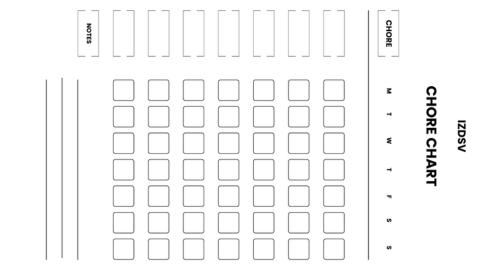
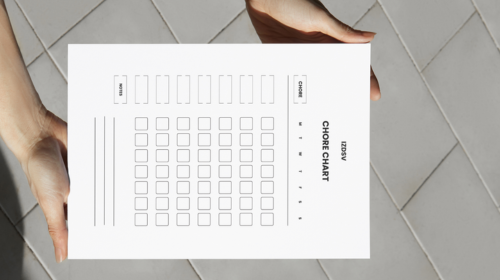
A minimalist chore chart strips away unnecessary complexity to focus on essential tasks and clear accountability. The key is to design something simple, visually clean, and easy to maintain without overwhelming your family with too many details.
- Choose a simple format: Use a basic grid with days of the week across the top and family members or tasks down the side
- Limit the number of chores: Focus on 5-7 essential tasks rather than listing every possible household duty
- Use neutral colors: Stick to black and white or 2-3 muted colors for a clean, distraction-free look
- Select clear fonts: Choose readable, simple fonts without decorative elements
- Include check boxes or spaces: Add small squares or circles for marking completed tasks
- Keep categories broad: Use general labels like “Kitchen,” “Bathroom,” or “Living Areas” instead of micro-managing every detail
- Make it reusable: Laminate your chart and use dry-erase markers, or create a template you can print weekly
- Display prominently: Place it in a high-traffic area like the kitchen or family room where everyone can see it
- Digital option: Use a simple spreadsheet or note-taking app if you prefer paperless organization
Importance of a Chore Chart
Chore charts create structure and accountability in household management, ensuring that responsibilities are clearly defined and fairly distributed. They eliminate confusion about who should do what and when, reducing conflicts and the mental load of constantly delegating tasks.
- Establishes clear expectations: Everyone knows their responsibilities without needing to be reminded constantly
- Promotes fairness: Visual distribution shows that the workload is shared equitably among family members
- Teaches responsibility: Children learn accountability and the importance of contributing to the household
- Reduces nagging: Parents don’t have to ask for tasks to be completed repeatedly
- Creates routine: Regular chores become habits when they’re scheduled consistently
- Builds life skills: Young people learn essential household management abilities they’ll need as adults
- Tracks progress: Visual completion marks provide satisfaction and motivation
- Prevents tasks from being forgotten: Important recurring chores don’t slip through the cracks
- Facilitates teamwork: Family members see themselves as part of a cooperative unit working toward a common goal
Benefits of Minimalism in Chore Management
Minimalist chore management reduces decision fatigue and makes household routines more sustainable by focusing only on what truly matters. By eliminating unnecessary tasks and complexity, you create a system that’s actually maintainable rather than one that looks good on paper but fails in practice.
- Less overwhelm: A shorter, focused list feels achievable rather than daunting
- Easier maintenance: Simple systems are more likely to be used consistently over time
- Reduced visual clutter: Clean design doesn’t add to household stress or sensory overload
- Faster decision-making: Fewer choices mean less time spent figuring out what to do
- More flexibility: Simple frameworks adapt easily when schedules or needs change
- Lower resistance: Family members are more willing to engage with straightforward systems
- Focus on essentials: Energy goes toward tasks that genuinely matter for health and functionality
- Sustainable habits: Minimalist approaches prevent burnout from over-ambitious cleaning schedules
- Mental clarity: Simplified responsibilities reduce the mental load of household management
- Quality over quantity: Doing fewer tasks well is better than rushing through an exhaustive list
Understanding the Basics of a Chore System
A chore system is an organized approach to managing household responsibilities that defines what needs to be done, who does it, and when it happens. It transforms household maintenance from chaotic, reactive task management into a predictable routine that distributes work fairly and keeps your home functioning smoothly.
- Creates structure: Establishes a framework for completing regular household tasks
- Defines roles: Clarifies who is responsible for specific duties
- Sets schedules: Determines the frequency and timing of various chores
- Provides accountability: Makes it clear when tasks are completed or neglected
- Reduces mental load: Eliminates the need to constantly remember and delegate tasks
- Adapts to households: Can be customized for families, roommates, or individuals living alone
- Includes rewards/consequences: May incorporate incentives or natural outcomes for completion
- Evolves over time: Adjusts as family members age, schedules change, or priorities shift
- Balances workload: Ensures fair distribution based on age, ability, and availability
- Supports independence: Helps household members take ownership of their living space
What is a Chore Chart?
A chore chart is a visual tool that lists household tasks and tracks who completes them and when. It serves as a centralized reference point that eliminates confusion, reduces the need for verbal reminders, and provides a sense of accomplishment when tasks are checked off.
- Visual reference: Displays tasks, assignments, and schedules in an easy-to-see format
- Tracking mechanism: Shows completion status through checkmarks, stickers, or other markers
- Communication tool: Conveys expectations without requiring constant verbal reminders
- Organizational aid: Keeps all chore information in one accessible location
- Motivation device: Provides visual feedback that encourages task completion
- Fairness indicator: Makes workload distribution transparent to all household members
- Routine builder: Reinforces regular habits through consistent scheduling
- Flexibility option: Can be adjusted weekly, monthly, or as needs change
- Age-appropriate design: Can be simple with pictures for young children or detailed for teens and adults
- Physical or digital: Exists as paper charts, whiteboards, apps, or online spreadsheets
Different Types of Chore Charts
Chore charts come in many formats, each designed to suit different household needs, ages, and management styles. Choosing the right type depends on your family structure, the complexity of your household tasks, and what will actually get used consistently.
- Weekly grid charts: Display days of the week with assigned tasks for each person or day
- Rotating chore wheels: Use spinning wheels or circular designs where responsibilities rotate among family members
- Daily checklist charts: List tasks to complete each day with boxes to check off
- Magnetic or velcro charts: Feature movable pieces that children can physically move from “to do” to “done”
- Reward-based charts: Include point systems, stickers, or tokens that lead to privileges or rewards
- Age-grouped charts: Separate tasks by family member with age-appropriate responsibilities
- Room-based charts: Organize by area of the home (kitchen, bathroom, bedrooms) rather than by person
- Frequency charts: Group tasks by how often they occur (daily, weekly, monthly)
- Digital/app-based charts: Use smartphone apps or shared online documents for tech-savvy households
- Chore jar systems: Write tasks on slips of paper that are drawn randomly from a container
- Before/after charts: Divide the day into segments (before school, after dinner) with associated tasks
- Color-coded charts: Use different colors to represent different people or task categories
- Pictorial charts: Use images instead of words for pre-readers or visual learners
Steps to Create Your Minimalist Chore Chart
Creating a minimalist chore chart requires thoughtful planning to ensure you’re only including what truly matters and designing something sustainable. The goal is to build a system that simplifies rather than complicates your household management.
- Start with assessment: Evaluate your current household needs and pain points
- Prioritize simplicity: Focus on creating something easy to understand and maintain
- Involve the family: Get input from household members who will use the system
- Design for visibility: Make it attractive enough to display prominently
- Test and refine: Be willing to adjust after seeing what works in practice
- Keep it flexible: Build in room for changes as schedules and needs evolve
- Focus on essentials: Resist the urge to over-complicate or include every possible task
- Make it actionable: Ensure tasks are clear, specific, and achievable
Step 1: Identify Family Chores
Before creating your chart, you need to determine which tasks actually need to be tracked and who should handle them. This step involves taking inventory of your household responsibilities and deciding what’s essential versus what can be simplified or eliminated.
- List all household tasks: Write down everything that needs doing (cleaning, laundry, dishes, trash, pet care, yard work)
- Assess frequency: Determine how often each task truly needs to be done (daily, weekly, monthly)
- Eliminate unnecessary tasks: Question whether each chore is actually essential or just a habit
- Consider age appropriateness: Match tasks to family members’ capabilities and developmental stages
- Group similar tasks: Combine related chores to simplify (e.g., “clean bathroom” instead of listing each component)
- Identify time requirements: Estimate how long each task takes to ensure fair distribution
- Note skill levels needed: Consider whether tasks require training or can be done independently
- Account for schedules: Factor in school, work, and activity schedules when assigning responsibilities
- Prioritize by impact: Focus on tasks that make the biggest difference in home functionality and cleanliness
- Keep the list short: Aim for 5-10 core tasks rather than an exhaustive inventory
- Define completion standards: Be clear about what “done” looks like for each task
Step 2: Choose a Format for Your Chore Chart
The format you select should match your family’s lifestyle, preferences, and the age range of participants. A minimalist approach means choosing the simplest format that will actually get used rather than the most elaborate or Pinterest-worthy option.
- Consider your space: Decide where you’ll display the chart and choose a size that fits
- Match to tech comfort: Determine whether paper or digital works better for your household
- Simple grid format: Use a basic table with names/tasks in rows and days in columns
- Checklist style: Create a straightforward list with checkboxes for daily or weekly completion
- Card system: Write individual tasks on cards that can be moved or flipped when complete
- Whiteboard or chalkboard: Choose erasable surfaces for easy weekly updates
- Printed templates: Use free online templates designed for minimalist aesthetics
- Spreadsheet approach: Create a simple digital chart in Google Sheets or Excel
- App-based solution: Consider family organization apps like Notion, OurHome, Cozi, or Todoist
- Clipboard system: Use simple paper checklists clipped to a board in a central location
- Wall calendar: Adapt a monthly calendar to include recurring chores
- Consider maintenance: Choose a format you’re willing to update and maintain long-term
Step 3: Design Your Chore Chart Template
Designing your template is where minimalist principles really shine—every element should serve a purpose without adding visual clutter. The design should be clean, readable, and unintimidating so family members actually want to use it.
- Select neutral colors: Use black and white, or add one or two muted accent colors, maximum
- Choose legible fonts: Pick simple, clean fonts that are easy to read from a distance (sans-serif works well)
- Create clear sections: Use subtle lines or spacing to separate different areas without visual chaos
- Leave white space: Don’t fill every inch—breathing room makes the chart less overwhelming
- Size appropriately: Make text and checkboxes large enough to see and use easily
- Add minimal icons: If using symbols, keep them simple and consistent (avoid clipart overload)
- Include only essential information: Task name, person responsible, and completion tracking—nothing more
- Design for marking: Ensure checkboxes or completion areas are easy to mark with a pen, marker, or sticker
- Consider durability: If printing, use cardstock or laminate for repeated use
- Make it reusable: Design so it can work week after week (use days of week, not dates)
- Test readability: Show your draft to family members to ensure it’s clear and intuitive
- Keep dimensions practical: Standard letter size (8.5″ x 11″) works well for printing and display
- Create a header: Include a simple title like “Family Chores” or “This Week’s Tasks”
Step 4: Implementing the Chore System
Implementation is where many chore charts fail, so this step requires intentional effort to establish the system as a household habit. The key is introducing it positively, providing support during the transition, and maintaining consistency until it becomes routine.
- Hold a family meeting: Explain the new system, why you’re using it, and how it benefits everyone
- Get buy-in: Allow family members to provide input or make small adjustments to increase ownership
- Demonstrate how it works: Walk through examples of completing and marking off tasks
- Start small: Begin with just a few essential tasks rather than overwhelming everyone immediately
- Choose a prominent location: Display the chart where everyone passes by regularly (kitchen, hallway, mudroom)
- Set clear expectations: Define what completion looks like and when tasks should be done
- Establish check-in times: Create daily or weekly moments to review the chart together
- Provide necessary supplies: Ensure cleaning tools, supplies, and markers are accessible
- Offer initial guidance: Be available to help and answer questions during the first few weeks
- Celebrate completions: Acknowledge effort and finished tasks positively without over-rewarding
- Be consistent: Follow through with the system daily, even when it feels inconvenient
- Model participation: Adults should also have tasks on the chart and complete them visibly
- Adjust as needed: After 2-3 weeks, discuss what’s working and make reasonable modifications
- Address resistance calmly: Expect pushback initially and respond with patience and consistency
- Link to natural consequences: Connect task completion to privileges or logical outcomes when appropriate
Printable Chore Chart Ideas
Printable chore charts offer the perfect balance of structure and flexibility, allowing you to customize them to your family’s needs while keeping costs minimal. These physical charts provide a tangible, visual reminder that doesn’t require screens or apps, making them accessible for all ages and tech comfort levels.
- Free online templates: Websites like Canva, Pinterest, and organizing blogs offer downloadable designs
- Customizable PDFs: Editable templates let you add family names and specific tasks before printing
- Weekly reset charts: Designs meant to be printed fresh each week for a clean start
- Reusable laminated versions: Print once, laminate, and use dry-erase markers indefinitely
- Seasonal themes: Charts with subtle seasonal elements that can be swapped quarterly
- Magnetic printables: Print on magnetic paper to attach directly to refrigerators
- Size variations: Options from small (half-page) to large (poster-sized), depending on your space
- Age-specific designs: Charts with pictures for young children or streamlined text for teens/adults
- Reward tracker combinations: Charts that include both task lists and point/sticker tracking
- Minimalist aesthetics: Clean, Scandinavian-inspired designs with plenty of white space
- Monthly overview charts: Longer-term tracking for less frequent tasks
- Clipboard-ready formats: Standard letter size that clips easily to a board for portability
Simple Checklist Format
A simple checklist format is the most straightforward approach to chore tracking, featuring a clean list of tasks with boxes to check off. This no-frills design eliminates distractions and focuses purely on what needs to be done, making it ideal for minimalist households or those new to chore charts.
- Basic structure: Tasks listed vertically with one checkbox per day or per completion
- Daily reset option: Seven columns (one per day) allow you to see the whole week at a glance
- Single column version: Just task names with one checkbox for simple daily completion tracking
- Grouped by person: Separate checklists for each family member on one page
- Grouped by frequency: Sections for daily, weekly, and monthly tasks
- Morning/evening divisions: Split tasks by time of day for natural routine building
- Minimal design elements: Just lines, boxes, and text—no decorative elements
- Easy to scan: Clean layout allows quick visual assessment of what’s done and what remains
- Printable in black and white: No color required, saving ink and keeping costs down
- Room for notes: Small space at the bottom for reminders or adjustments
- Consistent spacing: Even, regular layout makes it easy to follow and use
- Large checkboxes: Generously sized boxes that are satisfying to mark and easy for small hands
- Task numbering: Optional numbers help with tracking and family communication (“Did you finish task 3?”)
- Works for individuals: Perfect for personal use, not just families
Color-Coded Family Chore Chart
A color-coded family chore chart assigns each family member a specific color, making it instantly clear who is responsible for which tasks. This visual system is particularly effective for families with multiple children or mixed-age households where task distribution needs to be obvious at a glance.
- Assign one color per person: Each family member gets their own color that stays consistent
- Color-blocked rows or columns: Use colored backgrounds to designate responsibility zones
- Colored text or boxes: Simpler than full backgrounds, but still provides a clear visual distinction
- Legend or key: Include a small reference showing which color belongs to which person
- Minimalist palette: Stick to 3-5 muted, complementary colors to avoid visual chaos
- High contrast: Ensure colors are distinct enough for colorblind family members to differentiate
- Strategic use of white space: Color accents stand out more against clean white backgrounds
- Rotating color sections: Show how tasks rotate among family members across weeks
- Age-appropriate color distribution: Visual representation of fair workload balance
- Printable in color: Designed for color printing, but can include patterns as backup for black-and-white
- Color-coded check marks: Use colored pens/markers matching assigned colors for completion tracking
- Shared task indication: Use multiple colors or a neutral color for tasks done together
- Visual equity: Quickly see if the color distribution looks fair across the chart
- Motivation through identity: Children often take pride in “their” color and associated responsibilities
- Easy accountability: Parents can instantly identify incomplete tasks and who’s responsible
Tips for Maintaining Your Chore Chart
Even the best-designed chore chart will fail without consistent maintenance and ongoing attention to how it’s working for your family. The key to long-term success is treating your chore system as a living tool that evolves with your household rather than a set-it-and-forget-it solution.
- Review weekly: Set a regular time to assess what’s working and what needs adjustment
- Keep it visible: Ensure the chart remains prominently displayed, not hidden or covered up
- Refresh regularly: Replace worn charts, update markers, and keep the area around them tidy
- Stay consistent: Follow through with the system even on busy or chaotic days
- Lead by example: Adults should visibly complete their own tasks and mark them off
- Celebrate successes: Acknowledge when the system is working well and tasks are getting done
- Address problems quickly: Don’t let issues fester—tackle resistance or confusion immediately
- Simplify when overwhelmed: If the chart becomes burdensome, remove tasks rather than abandon the system
- Seasonal adjustments: Modify tasks and expectations when schedules change (summer, school year, holidays)
- Keep supplies stocked: Ensure markers, cleaning supplies, and other necessities are always available
- Photograph or save versions: Document what works so you can return to successful formats
- Avoid perfection paralysis: A mostly-followed imperfect system beats an abandoned perfect one
Regular Check-Ins and Adjustments
Scheduled reviews of your chore system prevent small problems from becoming big frustrations and ensure the chart continues to meet your family’s changing needs. These check-ins provide opportunities to celebrate progress, address challenges, and make data-driven adjustments rather than reactive changes in moments of stress.
- Weekly family meetings: Dedicate 10-15 minutes to discuss how the chore system is functioning
- Ask specific questions: “Which tasks felt too hard?” “What took longer than expected?” “What went smoothly?”
- Track completion rates: Notice patterns in which tasks consistently get done or skipped
- Assess fairness: Regularly evaluate whether the workload is truly balanced across family members
- Adjust for growth: Update responsibilities as children develop new skills and capabilities
- Modify for schedules: Change task timing or assignments when activities, work, or school schedules shift
- Eliminate what doesn’t work: Be willing to remove tasks that aren’t serving your household goals
- Add tasks gradually: Introduce new responsibilities slowly rather than overwhelming the system
- Check physical chart condition: Replace, reprint, or refresh charts that are worn, damaged, or hard to read
- Evaluate reward systems: If using incentives, assess whether they’re still motivating or need updating
- Solicit honest feedback: Create a safe space for family members to share frustrations without judgment
- Document changes: Keep notes on what adjustments you’ve made and why, to inform future decisions
- Quarterly deep reviews: Every 3 months, do a more thorough evaluation and potentially redesign the chart
- Be flexible with standards: Adjust your expectations for task quality based on realistic capabilities
- Celebrate improvements: Acknowledge when adjustments lead to better participation or outcomes
Encouraging Family Participation
Getting everyone engaged with the chore chart requires more than just posting it on the wall—it demands intentional strategies to build motivation, reduce resistance, and create positive associations with household contributions. The goal is to shift from external enforcement to internal motivation, where family members take pride in their participation.
- Involved in creation: Let family members help design the chart and choose their own tasks when possible
- Explain the “why”: Help everyone understand how their contributions benefit the whole household
- Make it age-appropriate: Ensure tasks match each person’s developmental stage and capabilities
- Provide training: Teach how to complete tasks properly rather than assuming everyone knows
- Use positive language: Frame chores as “contributions” or “responsibilities” rather than punishment
- Recognize effort: Acknowledge attempts and progress, not just perfect completion
- Create natural consequences: Link task completion to logical outcomes (dirty dishes = no clean plates for next meal)
- Avoid nagging: Let the chart do the reminding rather than constant verbal prompts
- Make it convenient: Place cleaning supplies in accessible locations so tasks are easier to start
- Work together sometimes: Occasionally do chores as a family to build teamwork and make it social
- Respect preferences: When possible, let people choose between equivalent tasks based on what they dislike least
- Set reasonable deadlines: “Before dinner” or “by bedtime Saturday” works better than vague expectations
- Model a positive attitude: Adults should demonstrate that contributing to the household is normal, not burdensome
- Avoid comparison: Don’t pit family members against each other or praise one at another’s expense
- Be patient with resistance: Expect pushback initially and respond with consistency rather than punishment
- Connect to privileges: Link responsible participation to age-appropriate freedoms and choices
- Make completion visible: Ensure marked-off tasks provide visual satisfaction and a sense of accomplishment
- Rotate unpleasant tasks: Share the burden of the worst jobs rather than permanently assigning them
- Keep energy positive: Maintain an encouraging, supportive tone around chores rather than critical or frustrated